 Industry: Oil, Gas, & Energy
Application: Surface Profiling Aluminum Electrical Conductors for Improved Performance
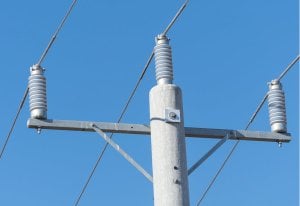
Customer Challenge: Manufacturers of overhead aluminum electrical conductors face increasing requirements to reduce wire reflectivity while maintaining product performance and durability. In many regions, highly reflective (“specular”) conductors are restricted or prohibited in environmentally sensitive areas, including federal parklands. In addition to reducing glare, conductor manufacturers often require a controlled surface profile that improves the adhesion of protective coatings used to enhance long-term performance in demanding outdoor environments.
The challenge was finding a reliable, high-throughput process capable of producing a consistent non-specular finish while integrating into existing wire production operations.
Empire’s Solution: Empire Abrasive Equipment custom designed automated air blast systems specifically engineered for processing aluminum electrical conductors. The systems utilize carefully selected light abrasive media to create a controlled, uniform surface profile along the length of the conductor. In addition to reducing surface reflectivity, the process promotes improved coating adhesion by creating an optimized anchor pattern on the aluminum surface.
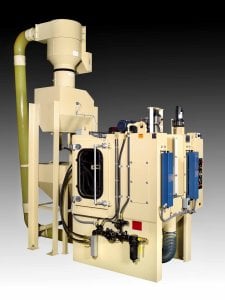 Empire’s expertise with light-abrasive blasting applications allowed customers to select from multiple process options, including systems utilizing plastic media or other specialty abrasives depending on product requirements.
The equipment can be integrated directly into wire manufacturing lines or installed as a secondary processing step within existing production facilities.
Results: Empire’s automated blasting systems enabled conductor manufacturers to consistently produce non-specular aluminum wire while maintaining the throughput levels required for large-scale production.
The controlled blasting process provided repeatable surface finishes, improved coating adhesion, and compliance with evolving industry and environmental requirements. By integrating blasting into the production process, manufacturers were able to improve product quality without sacrificing operational efficiency.
Key Benefits:
- Reduced conductor reflectivity
- Consistent non-specular surface finish
- Improved coating adhesion
- Continuous production capability
- Integration with existing manufacturing operations
- Proven performance in high-volume wire processing applications
Equipment Utilized:
- Automated air blast system
- Light-abrasive blast media
- Continuous wire handling system
- Integrated dust collection and media recovery